Home Photography Tool

Qastrocam alternatives

Free 18 alternatives

Official website

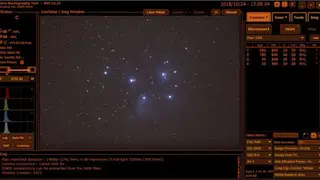
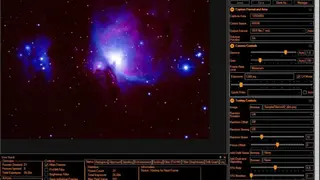
Qastrocam is the image capturing platform that is designed for the purpose of astrophotography. It has the ability to control the telescope and may receive the image from all the V4L devices. It has a user-friendly interface that is easy to use and is fully customizable. It is also free to use and can simplify all the pre-processing steps of the deep sky picture. It has the ability to register all the post-stacking processes in order to view the final results quickly.

It includes the features of image alignment, calibration, and correction, and can enhance the DSLR camera controls. In this platform, videos are captured in AVI, SER, WMV, and ADV formats, while photos are captured in PNG, FITS, TIFF, and JPG formats. High-speed cameras, including USB3 rates, are being used for HD imaging. By using this platform users may do dark frame subtraction, flat frame correction, background removal, and banding suppression.
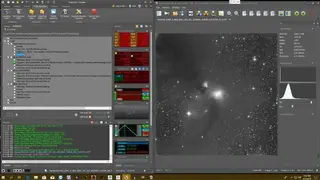
Qastrocam screenshotQastrocam screenshotQastrocam screenshotQastrocam screenshot

Ranked alternatives

  1. 5

    AllSkEye application is a free Windows imaging application designed for use with astronomical all-sky cameras. The app supports Starlight Xpress, ZWO ASI, and Altair Astro cameras, as well as any camera supported by the ASCOM or INDIGO framework. It is easily compatible with any version of Windows starting with Vista. It works best for some of the applications but still, some features do not work properly while using it. It is also useful in fixing the bugs while installing any software.

    It has the ability to run autonomously 24/7 and no user interface is required for this purpose. It allows the users to acquire images during the pre-set timer related to sunset or sunrise. Users will also be able to run the cameras at a fixed exposure time that depends on the brightness. It is equally beneficial in monitoring the current sky condition through webcam style website.

    AllSkEye alternatives
  2. 10

    Skyimaging.com is a popular website for dealing with astronomy and particularly with the Lunar and Planetary astrophotography and Deep Sky Imaging. It is helpful in post-image processing with so many tutorials available in the tutorial sections. It allows the users to do photography of the sky and is used to choose an instrument for astronomy and may take photos of the planets.

    The photography of all the planets of the earth such as Jupiter, Saturn, Mars, and Venus can easily be available on the website. The videos of these planets are also available on this website with the help of Astro-image processing. It has the ability to update the website after a regular interval of time. Astronomical images can easily be improved by using this platform.

    Skyimaging.com alternatives
  3. 15

    RegiStax is an open-source image processing software designed to manipulate digital photographs using a variety of tools. The editor is compatible with numerous image formats, including PNG, TIFF, JPG, and RAW files. The most common image format used on the internet is the JPEG file that displays photographs in a high resolution.

    The purpose of RegiStax is to create a variety of image effects in the digital photograph. In addition, it can be used to add text and share your images online. The technology behind this software consists of a variety of tools that are very simple. All you have to do is drag and drop the tools on your digital photographs.

    To add text, you need to select the text tool and click on the image to start writing. Many tools are used to manipulate photographs, such as the erase tool or the clone tool. The software can also be used to add artistic effects to your digital photographs that you can share on social networks or publish on the web. All in all, RegiStax is a great tool that you can consider among its alternatives.

    RegiStax alternatives
  4. 16

    CyberLink PhotoDirector 13 is a user-friendly photo editing software that is easy to use for anyone. Whether you’re an amateur who wants to make your photos look their best, or a professional editor who demands the very best in performance, CyberLink PhotoDirector 13 has the tools and features to suit your needs. Just pick a tool from the toolbar, load a photo, and you’re ready to go. It’s that easy.

    The tool gives you everything you need to edit your photos, including tools for fine-tuning color, brightness, contrast, and sharpness; burn and dodge tools, filter, special effects, slide shows with multiple transitions, color balance adjustments, including Red-eye Fixer, resizing, and much more. CyberLink PhotoDirector 13 provides you with the tools you need to make your photos look their best. It has a built-in browser, so you can have fun right from the start. Just pick a tool from the toolbar, load a photo, and you’re ready to go. All in all, CyberLink PhotoDirector 13 is a great tool that you can consider among its alternatives.

    CyberLink PhotoDirector 13 alternatives
  5. 17

    Luminar AI is an artificial intelligence-based photo editing tool that is designed to speed up the process of creating and delivering mesmerizing work. Luminar AI is an excellent tool for photographers as well as designers, artists, filmmakers, or anyone with a creative idea in mind. The software helps you produce the best possible results by analyzing and automatically fixing your work. Luminar AI is a revolutionary tool that makes you more productive and helps you get your work to market faster. As soon as you adjust the settings, it automatically finds the same problem in your photo collection, even if it’s comprised of thousands of images.

    A highlighting feature is the flaw detection algorithm that identifies over 200 errors or deficiencies, including problems with white balance, exposure, cropping, perspective distortion, color space, and more which can easily be fixed with one click. Other notable features include automatic skin retouching, portrait retouching, AI sky replacement, and much more. All in all, Luminar AI is a great tool that you can consider among its alternatives.

    Luminar AI alternatives
  6. 18

    Capture One Pro is a photo editing software developed by camera company Phase One. This software uses an algorithm that does not require any adjustment to the parameters of the image. This means that Capture One Pro can take RAW files and process them into final output without affecting image quality. Capture One Pro supports lens information and camera information to help correct for lens distortion, vignetting, and chromatic aberrations.

    It also composes the image based on camera manufacturer specifications for lens correction. The software includes a noise reduction tool, which helps remove grain from high ISO images. Capture One Pro uses ICC color profiles to color correct, ensuring that the final output is consistent with most printers, monitors, and other devices.

    Capture One supports tethered photography through the use of their Capture Pilot software. This software can communicate to cameras and also takes photographs automatically. Capture One Pro is available for Windows, Mac OS X, and Linux operating systems. It can import files in .xmp, .cr2, .x3f, .tif, .dng, and .arw formats. All in all, Capture One Pro is a great image processing tool that you can consider among its alternatives.

    Capture One Pro alternatives
  7. 19

    DeepSkyStacker is a photo-stacking and processing program specifically designed for astrophotography. It allows you to combine up to multiple images with different exposures into a single image, with the best detail from each one. This means that you can get rid of the noise in your images, which can be an issue when observing at high magnifications.

    In addition to its astrophotography capabilities, DeepSkyStacker has other features, such as a built-in noise reduction filter for reducing sensor noise in your images. With the ability to process your images on the camera or on a computer, DeepSkyStacker is much more versatile than other editors. All in all, DeepSkyStacker is a great image processing tool that you can consider among its alternatives.

    Highlighting features includes stacking multiple images of the same or different subjects into one image with no alignment of stars, using very narrowband filters to create color images, creating high dynamic range (HDR) images to bring out details in both dark and light areas of your image, creating images with stars that are not trailed, while still avoiding the use of field rotation, etc. It has multiple metering options that calculate the optimum exposure for each image to ensure that the dynamic range is captured in your final image.

    DeepSkyStacker alternatives
  8. 20

    Nebulosity is open-source software for image processing. It has an intuitive graphical user interface and provides a comprehensive set of tools for astronomers and astrophotographers to process the images captured with CCD cameras, DSLR cameras, or telescopes. The focus of the program is to make image processing easy and fast while providing powerful tools at the same time. Nebulosity’s Image processing tool provides many features for general image processing, including noise reduction, color balancing, sharpening, extracting information from images, and much more. Nebulosity ships with over 20 plugins which are added with the click of a button.

    The included plugins provide image processing capabilities ranging from simple tasks such as a color correction to complex features such as background subtraction for large digital camera images. Nebulosity can be used for image processing, data reduction, data analysis, image creation, editing, processing, and scripting for applying the same editing on multiple images. All in all, Nebulosity is a great image processing tool that you can consider among its alternatives.

    Nebulosity alternatives
  9. 21

    PixInsight is an open-source program that can be used to combine multiple images into one. The software program comes with a variety of different filters, filters, and assists that are meant to remove wrinkles while adding elements for compositing. The program can be used to remove noise from images, crop the image, reduce the size of an image, convert an image to black and white, or convert an image to sepia toning. PixInsight is also useful for creating posters that you can use to create posters by taking a series of images and layering them together.

    Usually, there are four frames per poster, each with a different filter. Then the poster is put through the program to combine all of these images into one postcard-sized image. PixInsight can also be used to make star trail photos. This is done by using a series of images, each with the camera pointing in a different direction. The software program combines this set of images together to make one long image, which appears as star trails when printed. All in all, PixInsight is a great image processing tool that you can consider among its alternatives.

    PixInsight alternatives
  10. 22

    Astro Photography Tool: APT is an open-source project created to make astrophotography easy for anyone. This tool allows you to easily take photographs of the night sky using your DSLR, smartphone, or point-and-shoot camera and automatically process them into an image with a red-blue star trail. Highlighting features include filters that can be used to narrow your search for the best star trails images, filters include image width, minimum brightness of stars, a maximum brightness of stars, number of trails, the distance between images in pixels, and more, APT is able to save your images as JPG, PNG, or multiple RAW formats with full resolutions and quality.

    The software supports integration with almost all generations of Canon EOS cameras, most of the Nikon DSLRs, compatible with CCD or CMOS sensors, telescopes, focus sensors, Astro cameras, guiders, light meters, etc. All in all, Astro Photography Tool: APT is a great image processing tool that you can consider among its alternatives.

    Astro Photography Tool: APT alternatives
  11. 23
    SiriLFree

    SiriL is an astronomical image processing tool that allows you to convert and pre-process images to look their best. The tool has easy to use GUI that allows you to monitor the camera continuously and to set parameters more intuitively. In the past, parameters involved were kept in a text file, which full-screen editing software could be used to monitor.

    This modern software allows you to monitor and control various aspects and settings of the camera, including focus, exposure time, ISO, white balance, and even the mount. The software also provides a preview of what will be captured during each shot. Another notable feature is its two different ways of shooting; by taking a series of pictures or by using an exposure bracketing mode.

    The former can be used in non-critical situations when the time to take the pictures is not limited. In this mode, the software creates a series of pictures taken at different times but whose exposure is subsequently adjusted to compensate for the slight change in brightness of the sky over time. The latter mode is used more for astrophotography, enabling the capture of various images using different exposures. All in all, SiriL is a great image processing tool that you can consider among its alternatives.

    SiriL alternatives
  12. 24

    Star Tools is one of the most advanced image processing tools that you can use for astrophotography. It has some advanced algorithms that use GPU acceleration to find out the noise and efficiently remove it without losing the quality. You can stack multiple images of the night sky, and it intelligently removes noise and pull out the star details with post-processing.

    Star Tools monitors your signal and its noise component, per pixel, throughout your processing. It sports image quality and unique functionality that far surpasses other software. Tracking in Star Tools makes sure that every module and algorithm can trace back how a pixel was modified at any point in time. All in all, Star Tools is a great image processing tool that you can consider among its alternatives.

    Star Tools alternatives
  13. 25

    BackyardEOS is an application that allows you to control your DSLR camera from your Laptop. If you’ve been looking for a way to control your camera from your PC, this is the perfect tool for you. The interface is very simple and easy to use. It makes it very easy to zoom in and even focus your camera, all while previewing a photo in live mode or recording a video.

    You can use this to take astronomical pictures and star trails with hands-free mode and still have all the control over the camera. All in all, BackyardEOS is a great image processing tool that you can consider among its alternatives.

    BackyardEOS alternatives
  14. 26
    SGProFreemium

    SGPro, aka Sequence Generator Pro, is an image processing and automation tool that is designed specifically for astrophotography. You can control your DSLR camera and all of its parameters with it. Automate the operations with a script in order to take dark sky images in long exposure. Other than the camera, it can also control accessories like filter wheel, focuser, mount, camera rotator, flat box, dome or roll-off roof observatory, weather stations, and more.

    A highlighting feature is creating a complex mosaic sequence. With this tool, you can plan complex mosaics in mere minutes and get to imaging quickly. Simply download the image that has your intended target, rotate to find your camera angle, draw a square around the area of interest and start imaging, and the tool will create a sequence for you. You can also use this tool for single-frame images just to ensure that your camera angle is in the ideal position. Other notable features include timers, self-timer, photo burst, sequencing, manual focusing, user profiles, and much more. All in all, SGPro is a great image processing tool that you can consider among its alternatives.

    SGPro alternatives
  15. 27
    ASTROARTFreemium

    ASTROART 7 is a powerful image processing software that is designed for professional astronomers to create spectacular images of the night sky. It has a user-friendly interface and includes new tools for editing astronomical pictures. Both beginners and professionals can create stunning images with this software, which is available for both Windows and Mac. It includes a large number of useful image processing functions, including image enhancement, astronomical filter, and many others.

    In addition to providing the most common functions you need for astronomical image processing, it also allows you to apply special effects such as blur and color shift, and inversion in order to obtain artistic effects in your pictures. And the great thing is that it allows you to choose your favorite color rendering algorithm through its new color management system. Moreover, another great thing about ASTROART is that it allows you to submit your processed images in its online gallery and even vote for others’ images. All in all, ASTROART 7 is a great image processing tool that you can consider among its alternatives.

    ASTROART alternatives
  16. 28

    Astro Pixel Processor is a deep sky image processing software. It is designed to be a powerful and user-friendly environment for the research of astronomical images. The software helps astronomers by providing an automated system that can create stunning visuals from their data. The software is capable of processing data from all modern astronomical CCD and DSLR cameras, giving you the freedom to choose any camera you like. Astro Pixel Processor processes data from a large number of sensors, including 10bit and 14bit sensors.

    The software will work to bring even the most complicated deep-sky object to life, creating easy-to-follow astronomical maps with waveforms and overlays. Other notable features include image calibration with bias, dark, flat frames and bad pixel maps, registration with Dynamic optical Distortion Correction, and accurate star analysis with very high star location precision. All in all, Astro Pixel Processor is a great image processing tool that you can consider among its alternatives.

    Astro Pixel Processor alternatives
  17. 29

    FireCapture is the full-feature astronomy program that is designed to control the operation of cameras that are used in high-speed digital video and other solar system objects. It allows the users to place a reticle on the image capture window and may adjust the size according to customer desire. It is one of the leading planetary capturing tools that help the users in webcam recording and many other processes. It is the most popular image capturing tool that supports many cameras such as image source cameras.

    It is the low-cost control program for SBIG astronomic cameras. It has the ability to control the telescope with the help of V4L devices. It has a user-friendly interface that is easy to use and has advanced AI-driven automation for Astrophotography. It is easily compatible with the operating system of Windows, Mac, and Linux. It includes the features of Web Recording, camera tracking, and many more.

    FireCapture alternatives
  18. 30

    Astrophotography-Telescope is an amazing telescope that is used to record the detail of extended objects such as the Moon, Sun, and Planets. Modern astrophotography has the ability to see invisible objects from the human eye such as dim stars, nebulae, and galaxies. It allows the user to see the lunar image of about 5mm across the DSLR camera with the full-frame of 35 mm format sensor. It is available at different prices on Amazon for example Celestron PowerSeeker 127EQ Telescope can easily be accessed at the subscription cost of 199 USD.

    It may include all the accessories of Telescope Eyepiece, Telescope Photo Adapter, and many more. Its primary purpose is to reduce the user interaction with the various software components. It has the ability to control a wide range of mounts, cameras, focusers, domes, and many more. It includes the features of Multi-Thread, Pro-grade Automata, FLI native Driver, Multi-Target, Single Star Autofocus, and many more.

    Astrophotography-Telescope alternatives